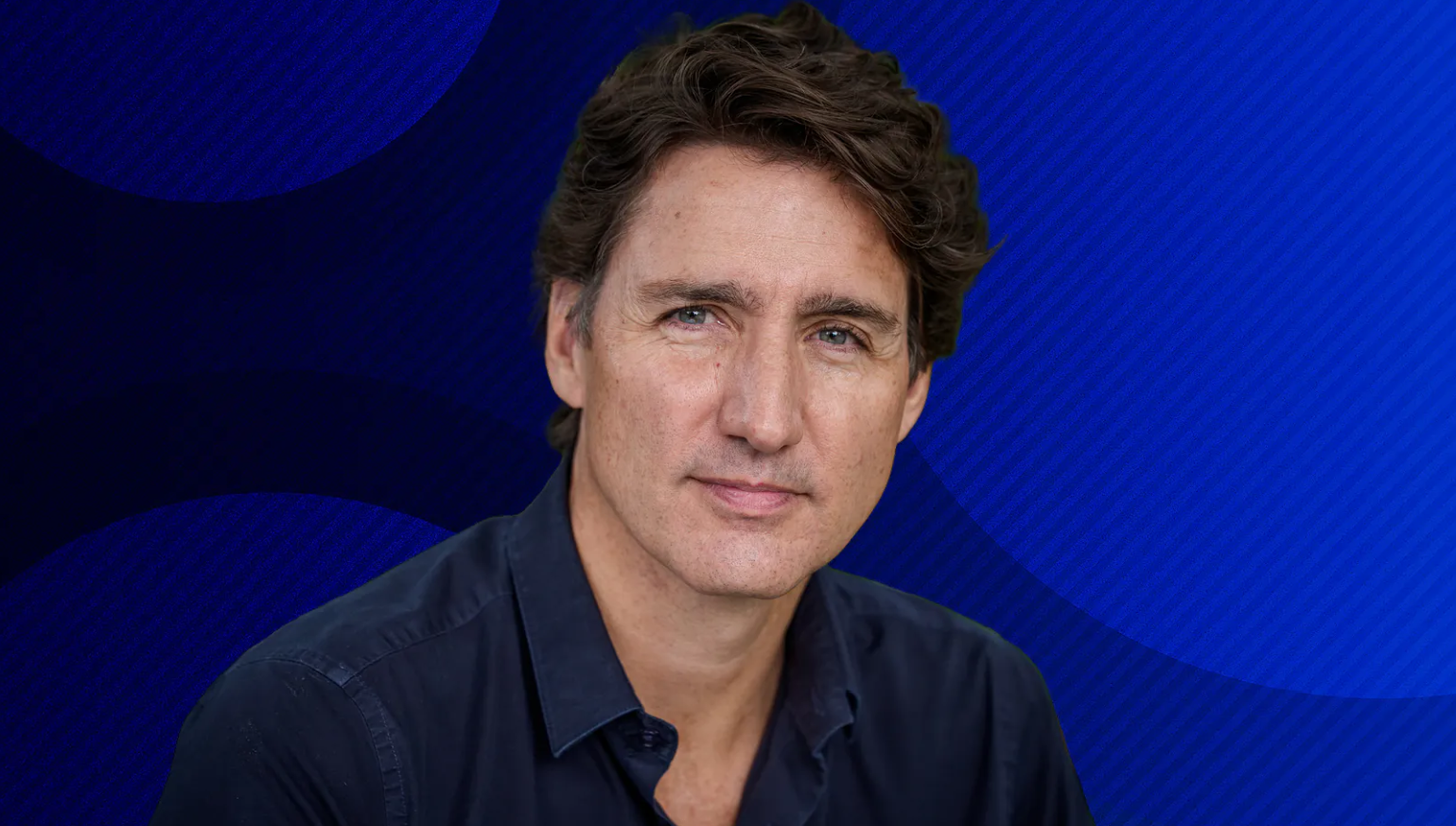
Justin Trudeau became one of the most internationally recognizable Canadian political figures of the twenty-first century. His rise to the prime ministership combined a famous political surname with a carefully constructed message of generational change, optimism, diversity, and progressive government.
Yet his years at the center of Canadian politics also demonstrated how quickly the image of a political leader can evolve. Trudeau moved from a highly popular new prime minister to a veteran incumbent facing economic anxiety, political polarization, ethics controversies, pandemic-era decisions, and growing public fatigue after years in government.
His political career cannot be understood simply through either admiration or criticism. It includes major policy changes, electoral victories, serious controversies, international crises, and a transformation of Canada’s political landscape.
Early Life and the Trudeau Political Legacy
Justin Pierre James Trudeau was born in Ottawa in 1971. His father, Pierre Elliott Trudeau, served as prime minister of Canada and became one of the most consequential and polarizing figures in modern Canadian political history.
Growing up within a prime ministerial family gave Justin Trudeau an unusual childhood. He was exposed to political institutions, international figures, media attention, and the pressures associated with public life from an early age.
However, he did not immediately pursue elected politics as an adult. Trudeau studied literature at McGill University and later education at the University of British Columbia. He worked as a teacher before eventually moving toward advocacy and politics.
His public profile increased significantly after the death of his father in 2000, when his eulogy attracted national attention.
Entering Federal Politics
Trudeau entered electoral politics as a Liberal candidate in the Montreal riding of Papineau. He won a seat in the House of Commons in the 2008 federal election.
At the time, the Liberal Party was struggling nationally. The Conservatives under Stephen Harper had become the dominant federal political force, while the Liberals experienced leadership instability and electoral setbacks.
Trudeau gradually increased his profile within the party and eventually sought its leadership.
In 2013, he became leader of the Liberal Party of Canada.
Critics argued that his success depended heavily on his surname and celebrity appeal. Supporters, however, saw him as a politician capable of rebuilding a party that had lost much of its former dominance.
The 2015 Election and Rise to Power
The 2015 federal election transformed Trudeau’s political career.
The Liberals campaigned on a message emphasizing change after nearly a decade of Conservative government. Their platform included infrastructure spending, tax changes, cannabis legalization, electoral reform commitments, and a more optimistic approach to immigration and diversity.
The Liberals won a majority government, and Trudeau became Canada’s 23rd prime minister.
His first cabinet attracted international attention for gender parity. When questioned about the decision, Trudeau’s response—“Because it’s 2015”—became one of the defining phrases of his early premiership.
His government initially projected an image of openness, youth, and progressive reform.
Major Domestic Policies
One of the Trudeau government’s most recognizable policy changes was the legalization of recreational cannabis. Canada became one of the first major developed countries to establish a national legal framework for recreational marijuana.
The government also introduced the Canada Child Benefit, pursued infrastructure investment, implemented carbon-pricing policies, and expanded several social programs.
Climate policy became an especially important and contentious part of Trudeau’s political identity. His government promoted carbon pricing and emissions reduction while simultaneously facing criticism from environmentalists over continued support for parts of Canada’s oil and gas sector.
This tension reflected one of the fundamental difficulties of Canadian climate policy: balancing environmental commitments with an economy in which energy production remains important.
Indigenous Relations and Reconciliation
Trudeau entered office promising a renewed relationship between the federal government and Indigenous peoples.
His governments took steps related to reconciliation, including policy initiatives, funding commitments, and responses to recommendations connected with the Truth and Reconciliation Commission.
At the same time, the government faced criticism over drinking-water problems, infrastructure gaps, legal disputes, resource projects, and the pace of change.
The discovery and investigation of potential unmarked graves associated with former residential-school sites intensified national attention on Canada’s treatment of Indigenous peoples.
Reconciliation consequently remained one of the most emotionally and politically complex issues of Trudeau’s time in office.
Ethics Controversies
The optimistic image of Trudeau’s early years was damaged by several controversies.
The SNC-Lavalin affair became one of the most consequential. The controversy involved allegations of inappropriate political pressure related to the prosecution of the Quebec engineering company. The dispute contributed to the departures of prominent members of Trudeau’s cabinet and raised questions about political interference and government ethics.
Another major controversy involved the WE Charity. Questions about the government’s relationship with the organization and connections involving Trudeau’s family generated further scrutiny.
Earlier controversies involving photographs and video of Trudeau wearing brownface and blackface also significantly affected his international image.
These episodes complicated the progressive public identity that had been central to his political brand.
Elections and Minority Government
After winning a majority in 2015, Trudeau led the Liberals into the 2019 election. The party remained in power but lost its parliamentary majority.
Another federal election followed in 2021, again producing a Liberal minority government.
Minority government changed the political environment. The Liberals needed support from other parties to pass legislation and survive confidence votes.
A later agreement with the New Democratic Party provided additional parliamentary stability for a period while advancing certain shared policy priorities, including programs related to dental care and pharmacare.
Leadership During the COVID-19 Pandemic
The COVID-19 pandemic became one of the defining events of Trudeau’s premiership.
His government introduced large-scale emergency economic programs to support individuals and businesses as lockdowns disrupted employment and economic activity. Federal authorities also played major roles in vaccine procurement, border policy, and financial assistance.
These measures received both support and criticism.
The pandemic also intensified political polarization. Vaccine mandates and other public-health measures became particularly controversial.
In early 2022, the Freedom Convoy protests brought trucks and demonstrators to Ottawa and disrupted border crossings. The federal government’s decision to invoke the Emergencies Act was historically significant and generated intense debate about public order, civil liberties, and government authority.
Foreign Policy and Canada’s International Position
Trudeau’s governments faced a complicated international environment.
Relations with the United States required navigating both the Donald Trump and Joe Biden administrations. Canada renegotiated the North American free-trade framework with the United States and Mexico, producing the agreement known in Canada as CUSMA.
Relations with China became particularly difficult following the detention of Canadians Michael Kovrig and Michael Spavor after the Canadian arrest of Huawei executive Meng Wanzhou on a U.S. extradition request.
Russia’s full-scale invasion of Ukraine in 2022 created another major foreign-policy challenge. Canada became a strong supporter of Ukraine through financial, military, humanitarian, and diplomatic assistance.
The Trudeau era also included significant tensions between Canada and India, particularly following Canadian allegations surrounding the killing of Sikh activist Hardeep Singh Nijjar in British Columbia.
Cost of Living, Housing, and Political Pressure
In later years, domestic economic concerns increasingly dominated Canadian politics.
Housing affordability became particularly severe in major metropolitan areas, while higher interest rates, food prices, rents, and general inflation placed pressure on households.
Immigration also became more politically contentious as Canadians debated the relationship between rapid population growth, housing supply, infrastructure, healthcare capacity, and labor-market needs.
These issues created major challenges for the Liberal government.
After many years in power, Trudeau also faced the political phenomenon that affects most long-serving governments: voters increasingly judged current problems as the responsibility of the incumbent administration regardless of how those problems originated.
The End of His Premiership
Trudeau eventually announced his intention to leave the Liberal leadership in January 2025. Mark Carney subsequently won the Liberal leadership and succeeded Trudeau as prime minister in March 2025.
The transition closed an extraordinary chapter in Canadian politics. Trudeau had served as prime minister for more than nine years, making him one of the country’s longest-serving modern leaders.
His departure also shifted the political debate surrounding his legacy. Once a politician leaves office, attention gradually moves from immediate electoral competition toward a broader assessment of what actually changed during their tenure.
Assessing Justin Trudeau’s Legacy
Justin Trudeau’s legacy is likely to remain contested for years.
Supporters can point to cannabis legalization, expanded family benefits, climate policies, social programs, diversity initiatives, pandemic assistance, and Canada’s international engagement. Critics emphasize government spending, housing affordability, ethics controversies, political polarization, immigration management, and dissatisfaction with aspects of economic policy.
Both perspectives form part of the historical record.
Perhaps the clearest conclusion is that Trudeau was not a politically insignificant prime minister. Whether viewed positively or negatively, his government changed Canadian policy in several important areas and dominated the country’s political conversation for nearly a decade.
His trajectory was also remarkable: the son of one of Canada’s most famous prime ministers became prime minister himself, rebuilt the Liberal Party, won three consecutive federal elections, governed through a global pandemic and major geopolitical crises, and eventually left office after nearly ten years at the center of Canadian political life.
The full historical judgment will take time. However, Justin Trudeau has already secured a significant place in modern Canadian political history.