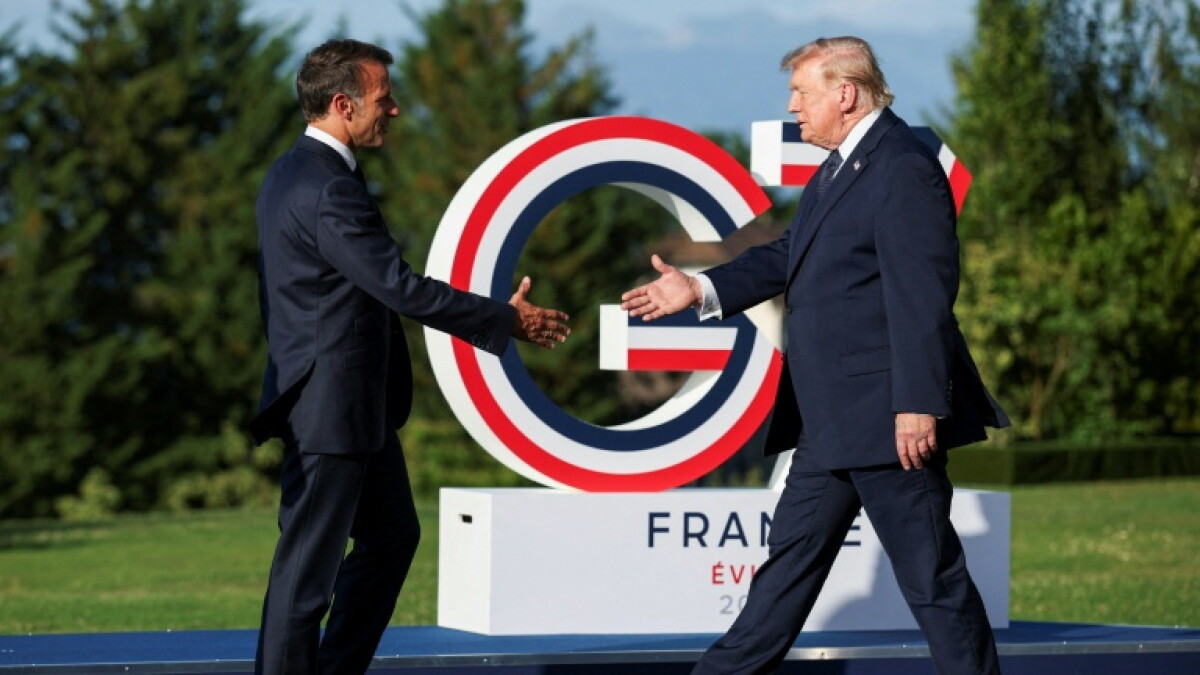
Artificial intelligence became one of the most important issues at the 2026 G7 Summit in Évian-les-Bains, France. Political leaders met with executives from Anthropic, OpenAI, Google and Mistral to discuss a question that reaches far beyond technology: who should have access to the world’s most powerful AI systems?
The phrase “G7 AI Power Deal” is not the official name of a signed agreement. It describes negotiations surrounding a proposed “trusted partners” framework that could give selected countries and companies access to advanced American AI models.
The discussions revealed that AI is no longer treated simply as commercial software. It has become a strategic resource connected to cybersecurity, economic influence and national power.
The Decision That Changed the G7 Debate
The dispute intensified shortly before the summit when the United States restricted foreign access to some of Anthropic’s most advanced models. American officials argued that these systems could identify and exploit serious weaknesses in computer networks, creating significant national-security risks.
European governments understood the security concerns but questioned why close American allies should face the same restrictions as potential strategic competitors.
The sudden limitation demonstrated how quickly access to essential technology could be interrupted. It also strengthened European concerns about depending heavily on a small number of American companies for AI models, cloud infrastructure and computing capacity.
G7 representatives consequently discussed allowing approved “trusted partners” to use restricted AI systems under specific security conditions. The partners could include governments, research institutions or private companies. Reuters
Why Advanced AI Has Become a Source of Power
The most capable AI models can perform tasks that were previously impossible to automate. They can analyse large volumes of information, discover software vulnerabilities, assist scientific research and support critical infrastructure.
This makes access extremely valuable. Countries with the strongest models, data centres, semiconductor supply chains and energy resources may gain considerable economic and strategic advantages.
However, the same technology can introduce serious risks. A model capable of protecting computer systems might also help attackers identify their weaknesses. Governments must therefore balance international cooperation with the need to prevent misuse.
The proposed G7 framework attempts to address this problem by distinguishing trusted allies from higher-risk users. Access could depend on security standards, technical safeguards and restrictions on how the models are deployed.
Europe’s Technology Sovereignty Question
For Europe, the debate is not only about gaining access to American systems. It is also about reducing long-term dependence on foreign technology.
European leaders increasingly support investments in domestic AI models, cloud services, semiconductor production and large-scale computing infrastructure. The objective is not necessarily to separate Europe from the United States but to ensure that European governments and companies cannot suddenly lose access to essential tools.
French President Emmanuel Macron expressed optimism that access to advanced cybersecurity models could be expanded. He also warned that broad restrictions could weaken confidence in American technology among close partners. Reuters
The result could be a two-track European strategy: negotiate continued access to leading American systems while building stronger domestic alternatives.
Technology Executives Enter Global Diplomacy
The summit also demonstrated the growing political influence of AI companies. Executives joined presidents and prime ministers to discuss infrastructure, regulation, cybersecurity and international standards.
Their participation reflected a new reality. Governments may write the laws, but private companies control many of the models, data centres and technical specialists required to build advanced AI.
This creates difficult questions about accountability. International AI rules cannot be designed without technical expertise, but they also cannot be left entirely to companies whose commercial interests may influence their decisions.
The G7 discussions therefore focused on closer cooperation between governments and industry. Leaders considered how common standards could encourage innovation while managing security, labour-market and economic risks. The official summit agenda included emerging technologies as part of broader discussions about resilient growth and global stability. European Council
What Happens Next?
The G7 did not announce a complete and permanent AI access agreement. Important details—including eligibility, oversight and enforcement—still require negotiation.
Nevertheless, the summit marked a significant shift. Access to advanced AI is now being discussed in the same strategic terms as energy, defence technology and critical minerals.
Future decisions could influence cybersecurity, international competition and the direction of the global technology industry. They may also determine whether advanced AI remains concentrated in a few countries or becomes available through alliances based on trust and shared standards.
The G7 AI power debate is therefore only beginning. The most important question is no longer simply which company will create the next major model. It is who will be allowed to use it—and under whose rules.