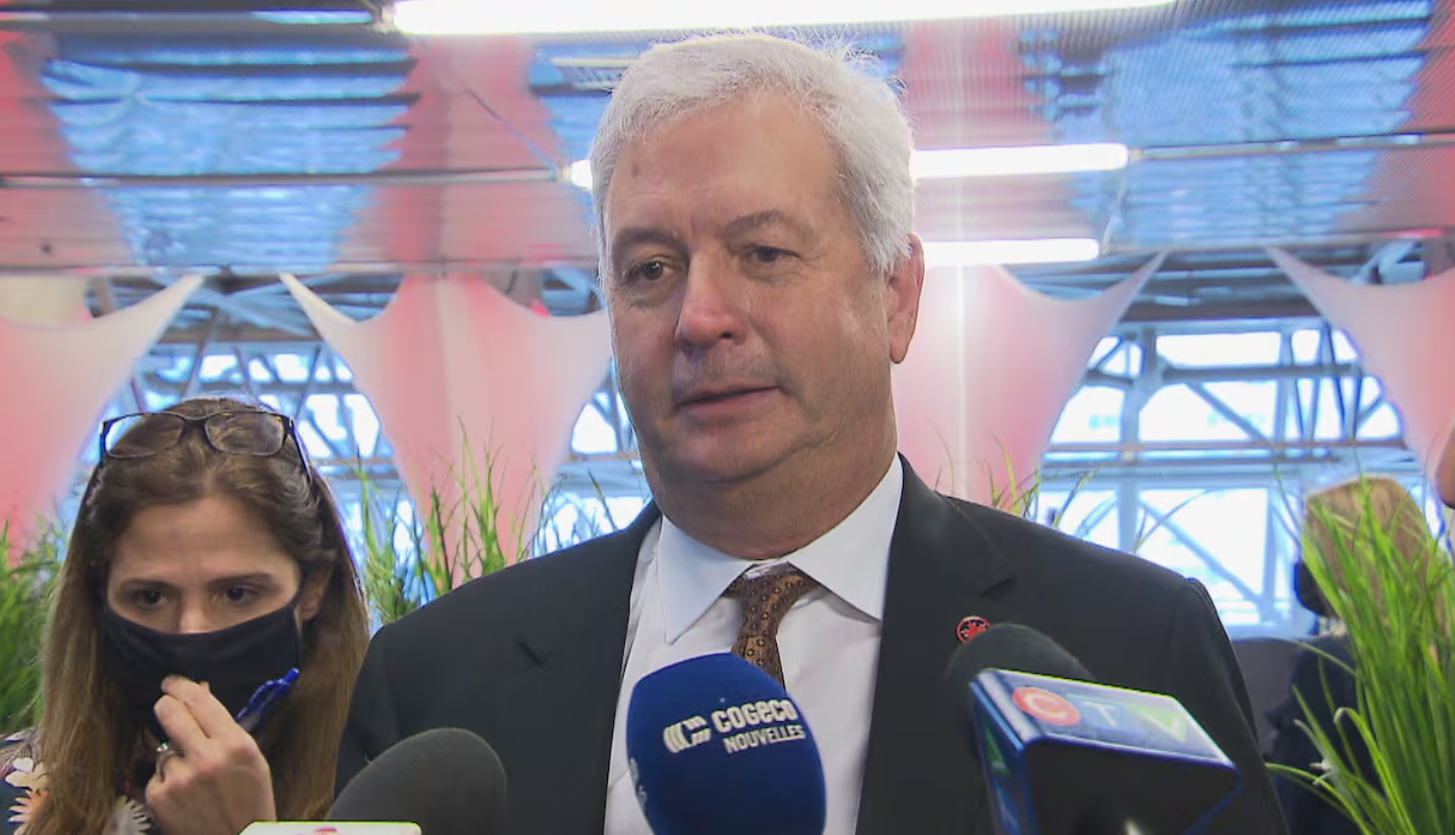
Michael Rousseau is a Canadian business executive best known for his leadership at Air Canada, one of the country’s largest and most strategically important corporations. Unlike celebrities whose careers develop in public from an early age, Rousseau built his reputation primarily within corporate finance and executive management before becoming a highly visible figure in Canadian aviation.
His leadership has coincided with one of the most challenging and transformative periods in the history of commercial air travel. The aviation industry faced extraordinary disruption during the COVID-19 pandemic, followed by a complicated recovery characterized by rapidly returning passenger demand, operational pressure, labor issues, inflation, aircraft constraints, and changing expectations about the travel experience.
A Career Built in Corporate Leadership
Before reaching Air Canada’s top executive position, Rousseau developed extensive experience in business and finance. His professional background made him particularly suited to managing the complex economics of a major airline.
Airlines are unusually difficult businesses to operate. They require enormous capital investments, highly trained workforces, complex maintenance programs, sophisticated scheduling systems, regulatory compliance, international partnerships, and constant management of unpredictable fuel and currency costs.
Financial discipline therefore plays an essential role in airline leadership.
Rousseau joined Air Canada in a senior financial capacity and eventually became chief financial officer. During those years, he gained detailed knowledge of the company’s operations and strategy before later moving into the chief executive position.
Becoming CEO of Air Canada
Rousseau became president and chief executive officer of Air Canada in 2021, succeeding Calin Rovinescu.
The timing was extraordinary. Global aviation was still dealing with the consequences of pandemic-era travel restrictions, reduced demand, border controls, and financial losses.
Leading an airline during a conventional economic cycle is difficult; leading one through an unprecedented shutdown and recovery required a different level of strategic flexibility.
Air Canada needed to rebuild passenger networks while managing staffing, aircraft availability, airport congestion, customer expectations, and financial recovery.
Rebuilding After the Pandemic
As travel restrictions eased, demand returned rapidly. That recovery was good news financially, but it also created operational difficulties throughout the global aviation industry.
Airports, airlines, baggage systems, security operations, and other parts of the travel ecosystem had reduced capacity during the pandemic. Restoring that capacity could not happen instantly.
Rousseau’s leadership therefore became closely associated with Air Canada’s recovery strategy.
The company rebuilt international and domestic connectivity while responding to complaints involving delays, cancellations, baggage, and customer service. These issues made airline executives highly visible public figures because transportation disruptions directly affect millions of passengers.
Competition and Canada’s Aviation Market
Air Canada operates within a complicated market. Canada has enormous geographic distances but a relatively small population compared with countries such as the United States.
Airlines must connect major metropolitan centers while also maintaining routes that support smaller communities and international connections.
Competition from Canadian and international carriers adds further pressure. Pricing, loyalty programs, aircraft quality, route networks, airport access, and customer experience all influence passenger decisions.
Under Rousseau, Air Canada has continued positioning itself as both Canada’s largest airline and an international network carrier capable of connecting passengers through Canadian hubs to destinations around the world.
Public Scrutiny and Language
Rousseau has also experienced the intense scrutiny that accompanies leadership of a major Canadian institution. One notable controversy involved his ability to speak French following a speech in Montreal in 2021.
The issue became politically significant because Air Canada is subject to Canada’s Official Languages Act, and language carries particular importance in Quebec and federal institutions.
Rousseau apologized and committed to improving his French.
The episode illustrated that leading a major Canadian corporation can involve responsibilities extending beyond financial performance. Executives of nationally significant companies are often expected to understand the cultural, linguistic, and political environment in which their organizations operate.
Technology and the Future of Air Travel
Modern airlines increasingly depend on technology, from mobile booking and biometric processes to artificial intelligence, predictive maintenance, revenue management, and personalized customer service.
Air Canada must simultaneously modernize its digital systems and maintain the physical infrastructure required to move passengers safely around the world.
Sustainability presents another major challenge. Aviation faces pressure to reduce its environmental impact, yet long-distance commercial flight remains heavily dependent on liquid fuels.
Airlines are exploring sustainable aviation fuel, more efficient aircraft, operational improvements, and other methods of reducing emissions. Executives such as Rousseau therefore operate at the intersection of economics, technology, environmental policy, and transportation.
Leadership in a Difficult Industry
Michael Rousseau’s tenure provides a case study in corporate leadership under extraordinary conditions. His role involves balancing shareholders, employees, passengers, governments, regulators, airports, unions, and international partners.
Air Canada’s importance to Canadian transportation ensures that its CEO will remain subject to considerable public attention.
Rousseau’s long-term legacy will ultimately depend on how successfully the airline navigates competition, customer expectations, technological transformation, sustainability challenges, and the continuing evolution of global travel.